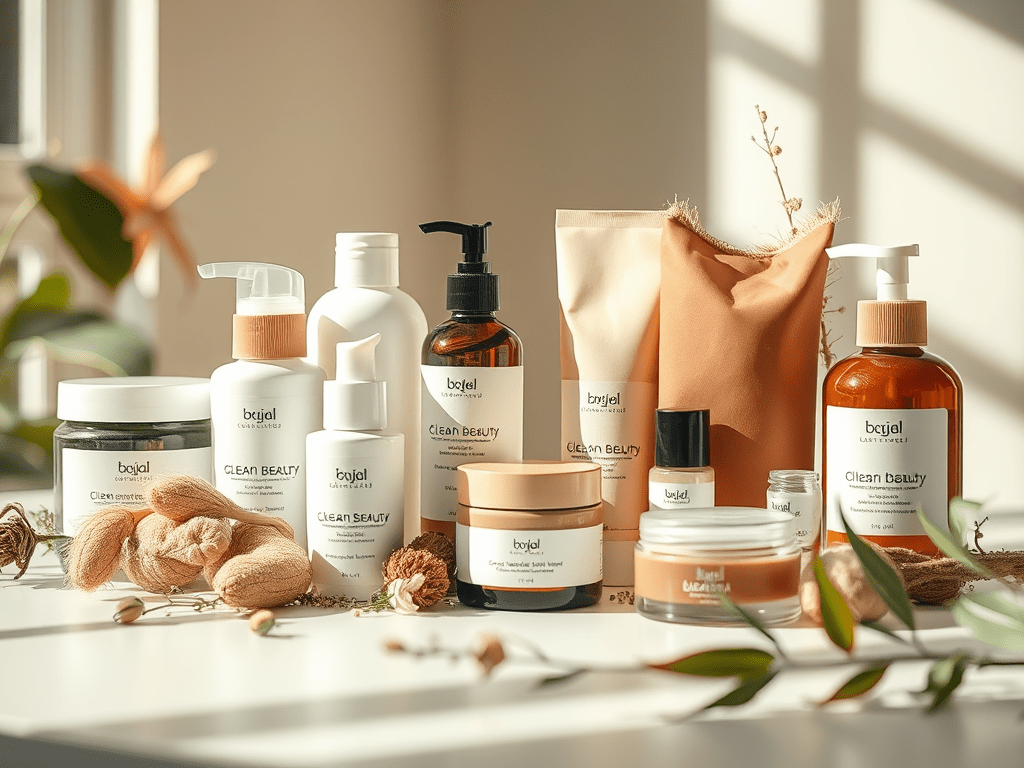
The clean beauty movement has taken over the skincare and cosmetics industry, with popular brands marketing themselves as “non-toxic,” “chemical-free,” and “all-natural.” But is clean beauty better for your skin, or is it just clever branding? In this guide, I’ll break down what clean beauty actually means and whether it’s worth the hype.
What Is Clean Beauty?
Clean beauty products rose to popularity in the 1990s, highlighting their all natural ingredients and their holistic approach to resolving issues using the power of nature’s ingredients. Many brands focus on avoiding parabens, sulfates, synthetic fragrances, or silicones, others prioritize organic or plant-based ingredients.
According to Harvard Health, one of the biggest draws to clean beauty stems from consumers being more aware of the harmful or toxic materials in popular brands. However, the beauty industry does not have as strict regulations as the food or medical industry, meaning much of the regulation for beauty products are not required to meet the same level of scrutiny that medicines and food are. That leaves each brand to define what qualifies as “clean” differently, making it hard for consumers to differentiate between true clean beauty and clever marketing.
The Dark Side of Clean Beauty
While there are benefits to clean beauty like fewer potentially irritating ingredients, clean beauty isn’t as sustainable and “guilt-free” as it’s often made out to be.
Sustainability and overharvesting are big problems in the beauty industry, with ingredients such as argan and shea being the top victims according to the Food and Agriculture Organization of the United Nations.
Many clean beauty lines rely on fear-based marketing, leveraging fear tactics by labelling all chemicals as harmful, when in reality, natural ingredients can be just as harmful if stored or used improperly. Experts recommend that consumers do their own research to ensure skincare doesn’t contain any harmful synthetic or natural ingredients. You can use sites like Skin Deep to look up your favorite products or ingredients for a health and safety rating based on a number of factors.
Another issue with clean beauty is the significant markup to their products. Brands are able to justify premium price tags in part because of their all natural ingredients. La Mer’s cult Creme de la Mer, formulated with lime tea and algae extract (among other ingredients) will cost you $100 for 0.5 ounces of product. (La Mer also sells a 16.5 ounce creme for a staggering $2,860 as of March 2025). Tata Harper, another iconic clean beauty brand, sells a Hyaluronic Diamond Illuminating Moisturizer for a whopping $140 for 1.7 ounces of product. This hefty price tag is justified by 42 “high-performance botanical ingredients” that are 100% natural in origin. While Tata Harper and La Mer have glowing reviews and cult-like followings, consumers themselves need to decide if all natural ingredients are worth the premium price tag.
Does Clean Beauty Work Better?
The efficacy of clean beauty is a complex matter that is highly dependent on the formulation of the product. Some natural ingredients are known skin irritants, while some have proven to help with skin irritation or redness.
It’s generally agreed that for products that focus on aging, acne, or sunscreen, traditional products are more effective, though further research is needed on that matter. Basic skincare like cleansers, plant-based oils, or simple moisturizers are usually most effective in the clean beauty industry.
Final Verdict: Is Clean Beauty Worth It?
Clean beauty can be worth the higher price tag if the formulation uses scientifically backed ingredients. While some brands offer high-quality clean products, others overcharge for basic formulations under the guise of being safer or using more sustainable methods of production.
Sources
https://www.health.harvard.edu/blog/clean-cosmetics-the-science-behind-the-trend-2019030416066
New York Times: The Dirt on Clean Beauty
Refined by Science
Washington, DC
2025
Designed with WordPress



Leave a comment